

Tooling
AconityWIRE Tooling
- Build space
- Ø 400 x H 780 mm³
- Laser type
- IR Gauss
- Laser power
- 1x 1200 W
Machine DESCRIPTION
AconityWIRE : Wire-Based Metal 3D Printing for Industrial Applications
Powder-Free Wire-Based Technology for Large Metal Components
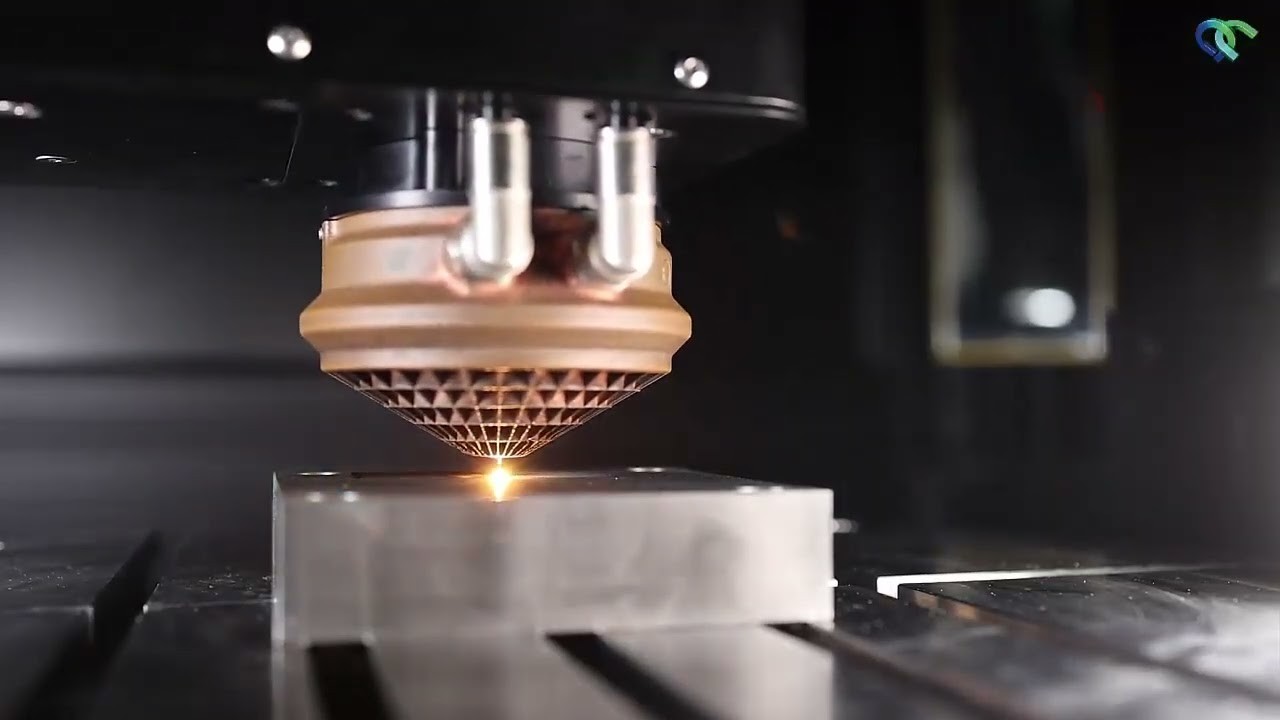
The AconityWIRE expands Aconity3D’s product line into wire-based metal additive manufacturing. This laser-driven system combines a compact footprint with a large build volume of Ø 400 x H 780 mm³, ideal for medium to large AM parts. Its force-controlled wire feed, shield gas nozzle, and unique ring-shaped laser intensity profile ensure uniform deposition and high-quality results. Using standard welding wires enables cost reduction, easy handling, and improved process reliability. The AconityWIRE Tooling works with a 1,200 W laser. The 2-axis turn-tilt table (360° rotation, 110° tilt) aligns the part optimally, so hardly any support structures are needed and features can be added to existing parts. HD camera process monitoring is included.


Technical SPECIFICATIONS
AconityWIRE delivers flexible, efficient, and powder-free metal 3D printing for large-scale industrial components.
- Build space
- Ø 400 x H 780 mm³
- Laser configuration
- 1x 1200 W
- Optics configuration
- Ring-shaped intensity profile with coaxial wire feed for direction-independent material deposition
- Process monitoring
- HD camera
- Mechanical configuration
- 6-axis robot2-axis rotary tilt table with infinite rotation
- Included options
- 5-axis support-free process
- Wire feed
- Closed-loop force control
- Wire diameter
- 0.6 – 1.2 mm
- Inert gas type / pressure
- Argon 4.6 / 6 barNitrogen / 6 bar
- Inert gas supply
- Coaxial
- Robot control
- Realtime tool path processing
- Machine dimensions (W x D x H)
- 3000 x 1500 x 2200 mm
- Machine weight (w/o powder)
- 2000 kg
- Applicable materials
- All weldable materials available as standard welding wire
In the News...
This project is funded by BMBF
This research and development project is / was funded by the German Federal Ministry of Education and Research (BMBF) within the “SME – Innovative: Research for Production” Funding Action (funding number 02P16K6000-02P16K604) and implemented by the Project Management Agency Karlsruhe (PTKA). The author is responsible for the content of this publication.